Chapter one
This is an excerpt from part of the first chapter:
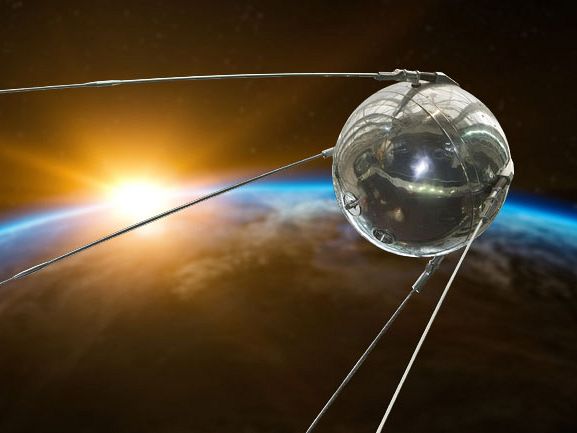
In the 1950s and 60s, the Cold War was not a history-book metaphor. It was a daily, concrete, palpable reality. On one side of the world stood the United States and their Western allies. On the other stood the Soviet Union, with its vast army, communist ideology, and above all its atomic bombs.
The two superpowers did not fight each other directly. That was too dangerous. They spied, threatened, and faced off by proxy in distant wars. Yet both knew that a single mistake, a misunderstanding, one general too jumpy on a dark night, could trigger a nuclear war capable of wiping human civilization from the planet.
This was not science fiction. It was arithmetic.
The Americans had bombs. The Soviets had bombs. And both had enough bombs to destroy the world not once, but many times over. Military strategists of the age used a chilling acronym for the situation: MAD, Mutually Assured Destruction. A balance of terror built on perverse but effective logic: no one would strike first because everyone knew the reply would destroy them too.
It was the most fragile peace in history. And everyone knew it.
In American schools, children practised drills called “duck and cover.” When the alarm sounded, they had to dive under desks and shield their heads with their arms — as if a wooden desk could save them from an atomic bomb. Parents built fallout shelters in their gardens. Supermarkets sold emergency food stocks. Newspapers printed maps showing the blast radius of the bombs.
It was an age when the end of the world seemed not just possible, but probable.
Into this climate of fear and tension came, on 4 October 1957, news that threw America into full panic.
It was a Friday evening. Americans were eating dinner, watching television, living ordinary lives, when radios and television screens began to carry extraordinary news: the Soviet Union had launched the first artificial satellite in history.
Its name was Sputnik, which in Russian simply means “travel companion.” It weighed eighty-four kilograms, was a metal sphere about fifty-eight centimetres across, with four thin antennae sticking out like spider legs. It was barely bigger than a basketball. Yet it was circling the Earth at nearly twenty-nine thousand kilometres per hour, completing an orbit every ninety-six minutes.
And as it orbited, it broadcast a signal. A simple, steady, hypnotic “beep beep beep” on radio frequencies anyone in the world could pick up with an ordinary receiver. The Soviets had done it on purpose: they wanted everyone to know, everyone to hear, everyone to grasp the unspoken message hidden in that banal sound:
We got there before you. We are already up there. Look up — we are above your heads.
That beep beep beep bounced through American homes like a slap in the face. Newspapers ran banner headlines. Politicians held emergency meetings. Generals went pale. Because that signal, seemingly harmless…
Excerpt — the full story continues in the book